OpenAI expands finance team as AI economics draw scrutiny

OpenAI is expanding its finance leadership team as the financial stakes of artificial intelligence continue to rise.
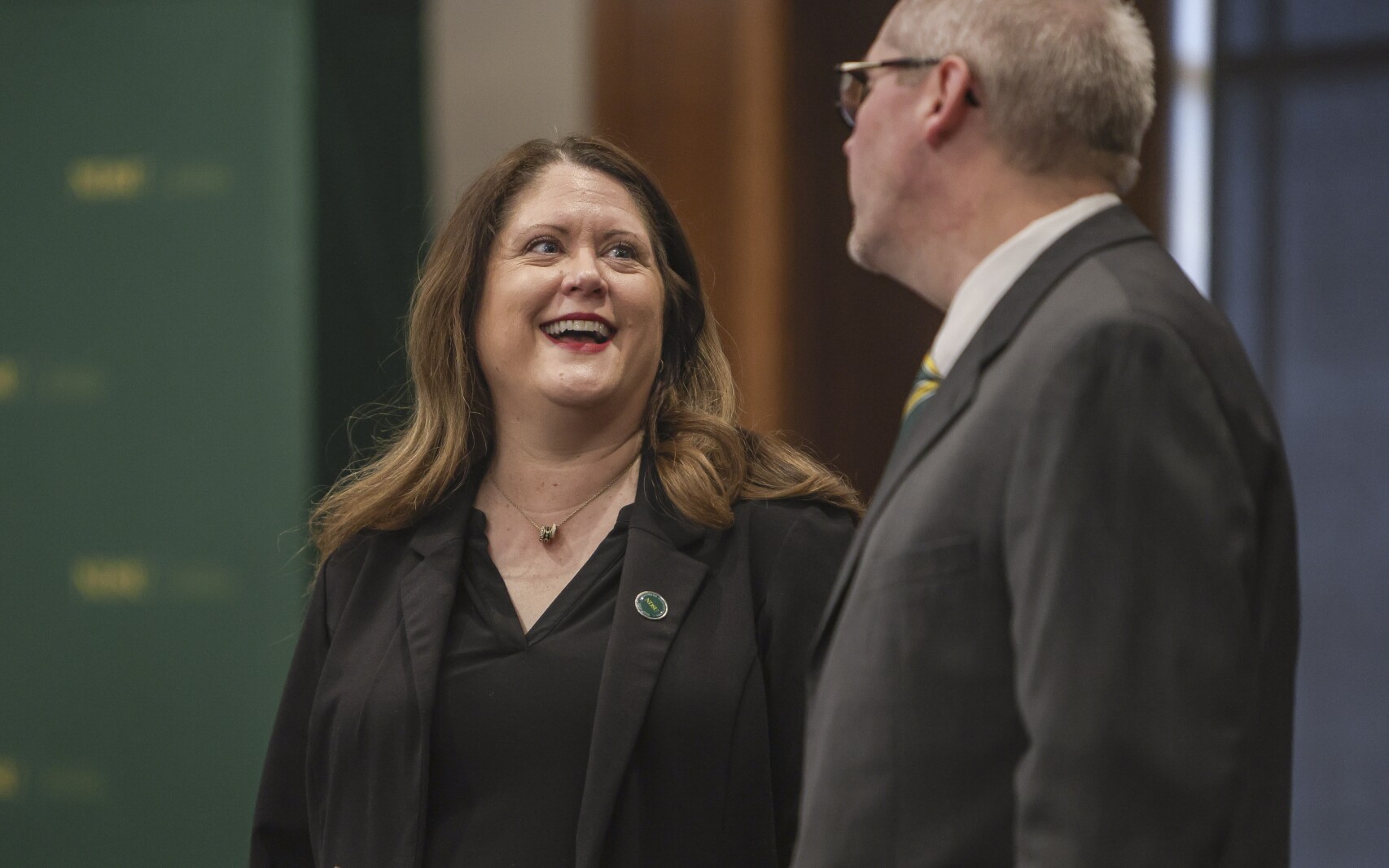
The company recently appointed Ajmere Dale as chief accounting officer and Cynthia Gaylor as business finance officer, corporate, according to a Tuesday LinkedIn post by OpenAI CFO Sarah Friar. In the post, Friar, who joined the company as CFO in June of 2024, said the finance organization is “building, shipping and operating at immense scale” and described the hires as a way to deepen OpenAI’s leadership bench as the company grows.
Dale will lead accounting and financial operations, while Gaylor will oversee corporate finance, long-range planning, capital strategy and investor relations. The appointments strengthen OpenAI’s finance function at a moment when questions about the sustainability of AI business models are becoming more prominent.
Gaylor brings experience in corporate finance and public markets. She most recently served as CFO of DocuSign and earlier chaired the company’s audit committee following its 2017 IPO before taking on the CFO job in late 2020.
Dale joins OpenAI from Block, where he led accounting and financial operations, including oversight of audit, complex transactions and public-company accounting frameworks. According to their LinkedIn profiles, Friar and Dale worked together as CFO and CAO, respectively, between August 2016 and December 2018 at Square, which was renamed to Block in 2021 after Friar left.
Rising skepticism around AI economics
Investment in artificial intelligence has accelerated rapidly since the release of ChatGPT in 2022, with companies across the sector committing tens of billions of dollars to computing infrastructure, data centers and talent. That surge has been accompanied by growing debate over whether revenue growth can keep pace with rising costs.
Bret Taylor, chairman of OpenAI’s board, recently said that AI is “probably” a bubble attracting capital across the technology stack, according to CNBC. He said market forces will determine which companies endure and predicted consolidation in the coming years.
Recent reporting has highlighted financial pressure facing OpenAI and similar companies. Inc. has pointed to OpenAI’s reliance on external funding and limited revenue diversification compared with established technology companies. A recent opinion column in the New York Times described generative AI as one of the most capital-intensive shifts in modern technology, raising questions about whether capital markets can sustain the scale of investment required before profitability emerges.
The column also noted that many users of generative AI tools do not pay for them, limiting near-term monetization and raising questions about the durability of current business models.
Building financial capacity
Friar has built finance teams in high-growth technology companies before, and CFOs who grew up under her wing have praised her ability to create teams that can execute.
Naeem Ishaq, now CFO of Collectors, previously worked under Friar at Salesforce and Square and was CFO of Checkr at the time of a prior interview with CFO.com. Ishaq described Friar’s influence as formative in his development as a finance leader, saying her leadership style and ability to scale finance functions shaped how he and those who worked on her teams now approach automation, fundraising and team building.
OpenAI’s evolving corporate structure adds another layer of complexity to its financial strategy. The company began as a nonprofit, later introduced a capped-profit subsidiary and has since reorganized its commercial operations within a public benefit corporation framework, while the nonprofit retains governance influence. That hybrid model has enabled OpenAI to raise capital while maintaining a mission-driven structure, but it has likely made long-term financial planning and investor alignment much more complicated.
Signals in timing
The expansion of OpenAI’s finance leadership comes as the company enters a phase defined by large-scale, global investment, complex partnerships and heightened external scrutiny.
This phase also comes as OpenAI’s broader strategy changes alongside its technology roadmap. Commitments to infrastructure spending, partnerships with major technology companies and efforts to expand monetization models all will require financial systems capable of managing long-term risk and capital allocation.
As CFOs know, the hiring of those with public-company accounting experience and capital strategy expertise is often a result of a goal being set to create a finance function fit for sustained engagement with investors and regulators. Dale and Gaylor’s addition to OpenAI’s leadership structure reflects the growing importance of financial governance and communication, as AI development becomes more capital-intensive and possibly too big to fail.
link